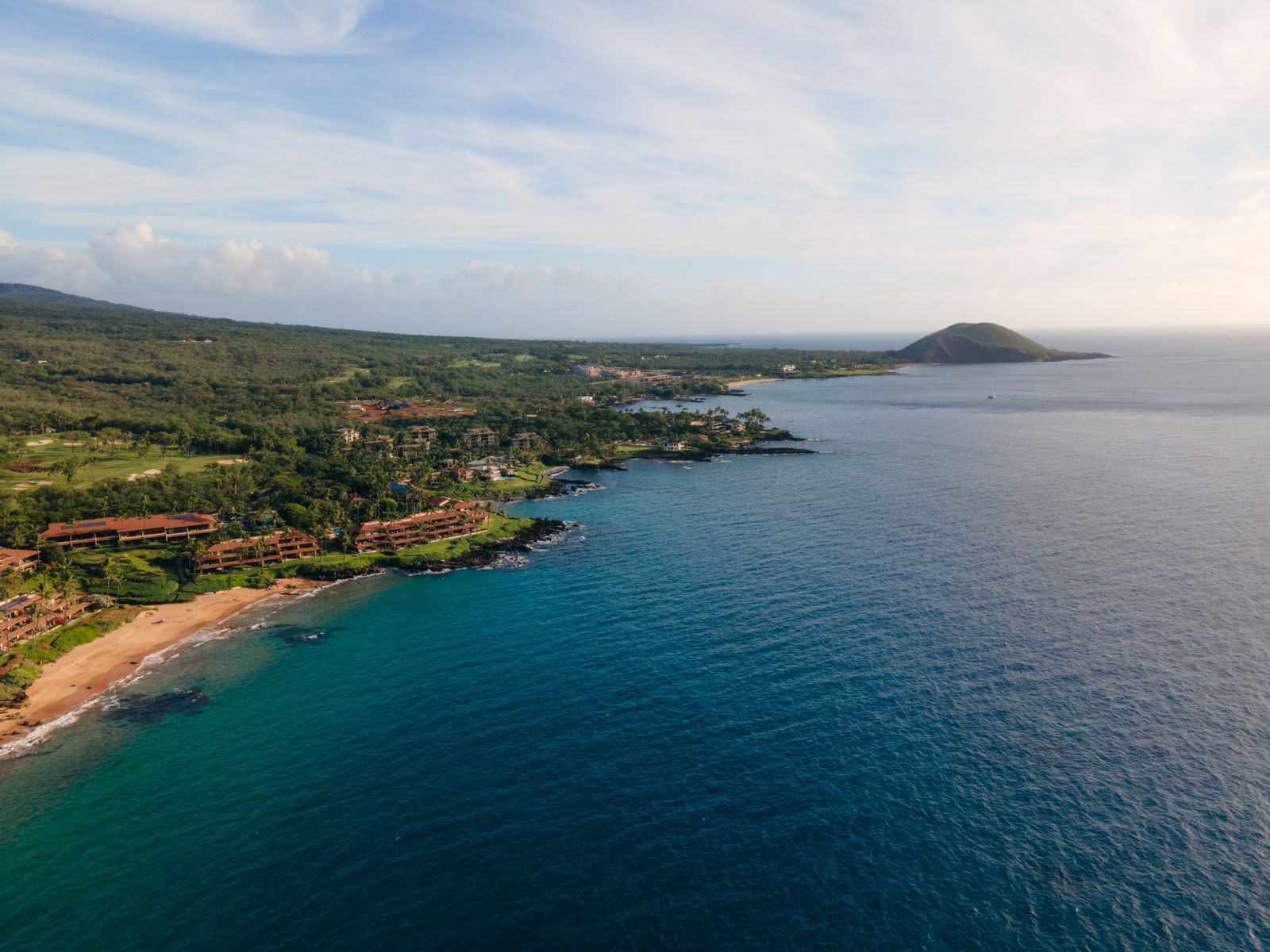
Molokini Crater
A crescent of volcanic rock, a sheltered coral bowl and one of Hawaii’s oldest marine reserves.
Plan a Maui Cruise With MolokiniWhat Molokini Crater Actually Is
Molokini crater is the eroded rim of a small volcanic cone that erupted in the shallow sea off Maui roughly 230,000 years ago. Today it is a 23-acre crescent of rock, about four-tenths of a mile across and some 160 feet high at its tallest point.
Geologists count it among the volcanoes that built the old landmass known as Maui Nui, which once joined Maui, Molokaʻi, Lānaʻi and Kahoʻolawe. As sea levels rose and the cone eroded, the southern side of the crater sank below the surface. What remains is a natural amphitheater: steep, bare rock on the outside, and a sheltered bowl of coral and sand on the inside, open toward Kahoʻolawe.
Inside the Rim and Outside It
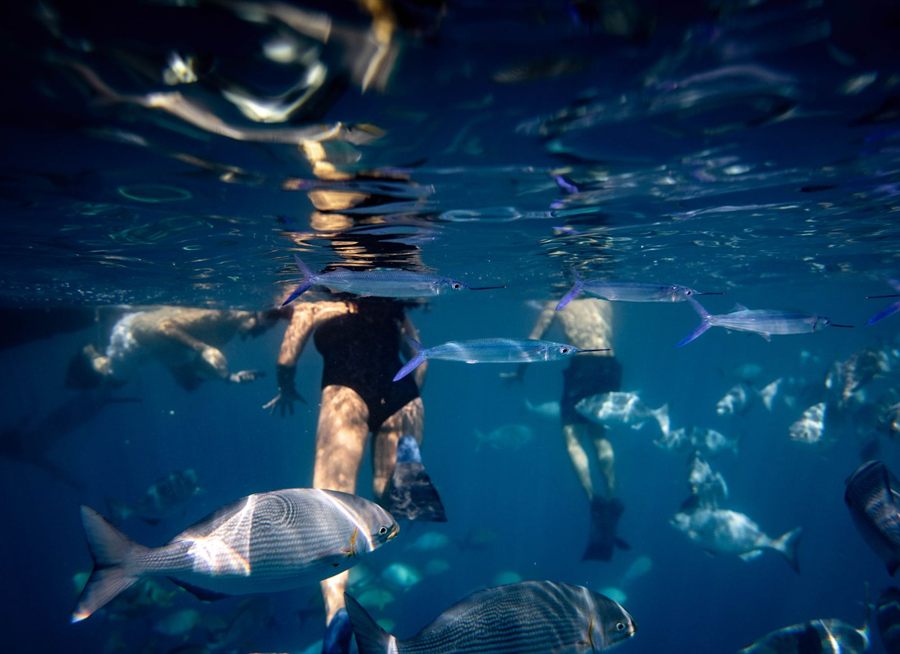
The inner crater is where nearly every snorkel boat moors. The reef starts a few feet below the surface near the rim and slopes away toward deeper sand in the middle of the bowl. Expect butterflyfish, tangs, triggerfish (including the state fish, the humuhumunukunukuapuaʻa), parrotfish and the occasional moray eel tucked into the coral.
The back wall is the outer face of the rim. It drops steeply into very deep water and is exposed to currents, so it is visited only on calm days and mostly by divers or by small boats running drift snorkels with experienced guides.
A Protected Place
The State of Hawaiʻi made Molokini a Marine Life Conservation District in 1977. The district covers the islet, the crater and the surrounding underwater slopes. Inside it you may not fish for or take any marine life, feed fish, or remove sand, coral or rock; commercial boats need a permit and use fixed day-use moorings instead of dropping anchor on the reef. The islet itself is a state seabird sanctuary where wedge-tailed shearwaters and Bulwer’s petrels nest, which is why no one may set foot on it. The full rules are on the Hawaiʻi Division of Aquatic Resources Molokini Shoal page, and our reef rules page puts them in plain English.
Seeing It From Shore and From Your Ship
You can see Molokini’s low crescent from beaches and lookouts along south Maui, from Kihei down to Makena, and on clear days from the slopes of Haleakalā. Cruise ships arriving at Kahului approach from the north, so the crater is not usually visible from the deck; the boat trip is the way to see it up close.
Because it is so easy to reach and so well protected, Molokini is busy. Dozens of permitted boats visit, most of them in the morning. A little planning, covered on the best time to snorkel Molokini page, makes a real difference.
See Molokini on a Hawaii Cruise
Our cruise advisors at Mister Cruise can find Hawaii sailings with a full daytime call on Maui, so a morning crater snorkel fits in. Free quotes, no obligation.
Get Hawaii Cruise Quotes