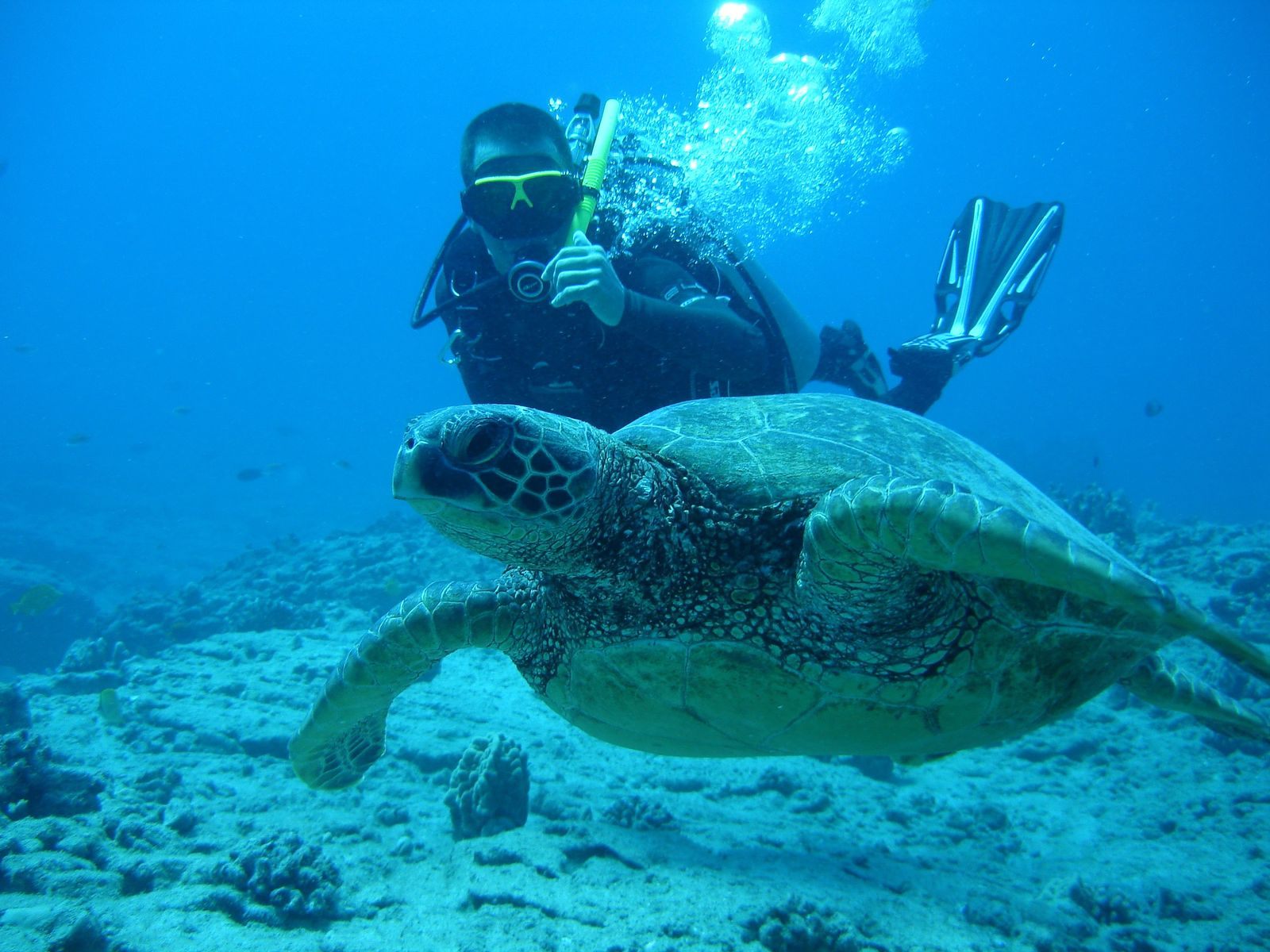
Molokini Crater Scuba Diving
A gentle reef bowl on one side of the rim, a deep blue wall on the other.
Plan a Maui Cruise With MolokiniTwo Very Different Dives
Molokini crater scuba diving offers two experiences: the inner crater, a gentle reef dive suitable for newly certified divers, and the back wall, a dramatic vertical drop on the outside of the rim that calls for experience and good conditions.
Inside the crater, divers descend along the reef slope toward the sandy center, with coral heads, reef fish, eels and, at times, whitetip reef sharks resting on the bottom. Depths vary from shallow to moderate, so it suits a wide range of divers. On the back wall, the reef plunges into very deep water. It is usually done as a drift dive, with the boat following the group, and currents can be strong. Operators choose the site on the day.
Who Can Dive Molokini
Certified divers
Bring your certification card and logbook. Many boats run two-tank trips: the crater first, then a second site.
Introductory divers
Some operators offer supervised introductory dives for non-certified guests in suitable conditions inside the crater.
Snorkel + dive groups
Mixed boats let snorkelers and divers travel together, useful for families with different comfort levels.
What Divers Look For
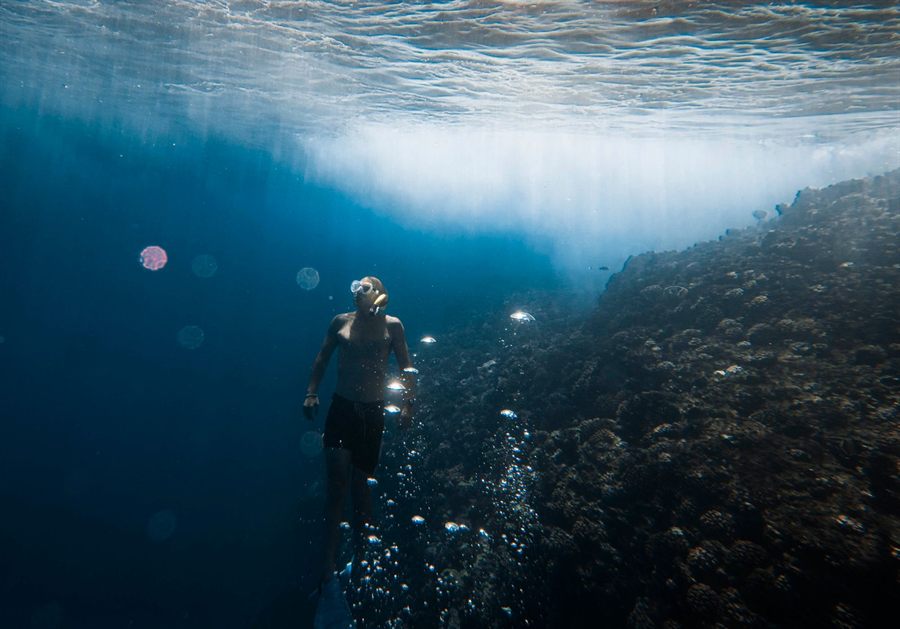
Inside the crater, the reef slope is a good place to slow down and look closely: moray eels in the coral, octopus camouflaged against the rock, and schools of butterflyfish, tangs and goatfish over the sand channels. Whitetip reef sharks sometimes rest on the bottom, and manta rays and eagle rays are occasional visitors. On the back wall, the attraction is scale — a vertical face covered in coral and sponges, dropping away into deep blue water where larger fish pass by.
Because the district is a no-take reserve, spearfishing gear is not part of any Molokini dive, and divers follow the same rules as snorkelers: no touching, no feeding, nothing taken. Good buoyancy control matters here more than anywhere, since a careless fin kick can break coral that took decades to grow. If your skills are rusty, ask about a refresher before the trip; many operators offer one, and it makes the dive far more enjoyable.
Dive Questions
Do I need to be certified to dive Molokini?
For standard dives, yes: bring proof of certification. Some operators run supervised introductory dives for non-certified guests inside the crater when conditions allow.
Is the back wall suitable for beginners?
Generally not. It is deep, exposed to currents and usually done as a drift dive, so operators reserve it for experienced divers on calm days.
Diving and Cruising: Timing and Safety
- Flying and altitude after diving: standard dive-safety guidance is to wait before flying, and the same caution applies to driving high up Haleakalā on the same day. Plan the volcano and the dive on different days.
- Back aboard on time: two-tank trips from Maʻalaea can run into the early afternoon. Check the return time against your ship’s all-aboard.
- Medical forms: dive operators require a medical questionnaire; some conditions need a doctor’s sign-off in advance.
- Insurance: consider cover that includes dive accidents; see our sister site Cruise & Travel Insurance.
Bookable Maui dive trips, with current details, are on Shore Activities.
Plan a Dive-Friendly Hawaii Cruise
Want a long Maui call or an overnight so you can dive and still see the island? Our cruise advisors at Mister Cruise will look for the right sailing and send free quotes.
Get Hawaii Cruise Quotes